 Deniz Bodur
Pressure Relief Bed
Concept
Human pressure relief products, such as gel cushions and air cell mattresses, already work on the idea of spreading load over a wider area. We adapted that principle for dogs with a passive cell system.
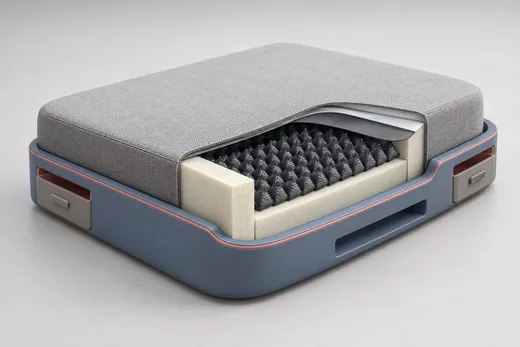
- Cell layer. Small triangular fabric units are filled with polymer beads and fiber and sewn into a pyramid structure. They shift under the body and spread pressure without any pump or power.
- Sponge walls. A foam base holds the cells in place. Its thickness is double the thickness of the cell layer.
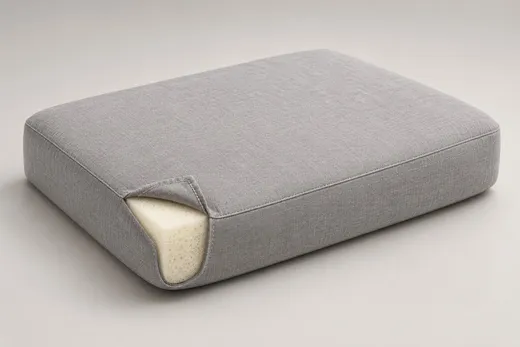
- Covers. A tent fabric layer keeps water out, and a water repellent fabric on top makes the surface comfortable.
- Groove system. Grooves around the surface guide deformation and help stabilize the form.
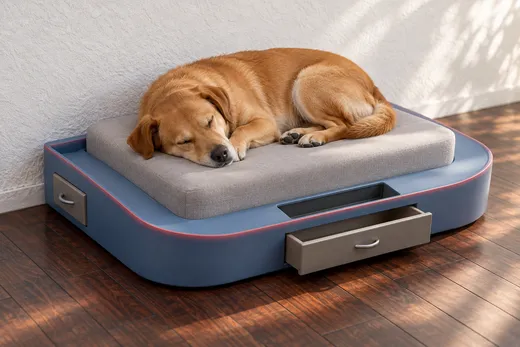
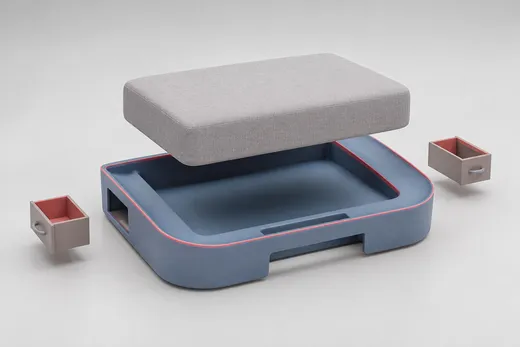
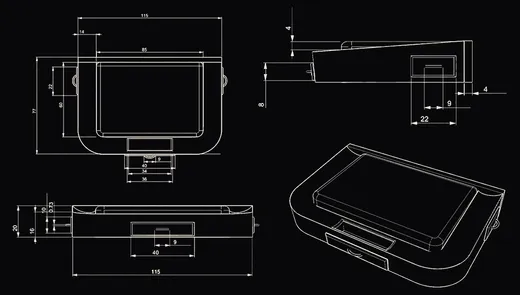
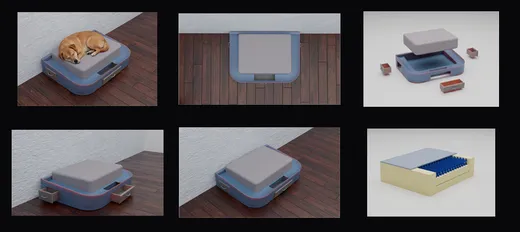
- Shell with storage. A low rounded shell holds the cushion and has two side drawers for supplies and a front drawer under an open slot that collects urine, so caregivers can keep everything in one place. The cushion lifts out for cleaning.
How the cushion is built
AI generated visualization of the build order.
How the pods spread the load
Open source build guide
We wrote a short guide so shelters and volunteers can make the cushion themselves from cheap, easy to find materials.
Materials
Cells
- Thin fabric
Filling
- Polymer beads
- Polymer fiber
- Cushion sponge
Coating
- Tent fabric (waterproof)
- Water repellent fabric
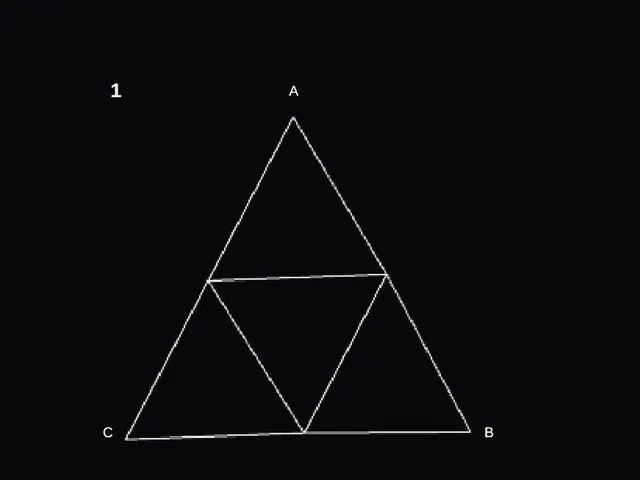
1Cut the fabric into a triangle, following the guide drawing.
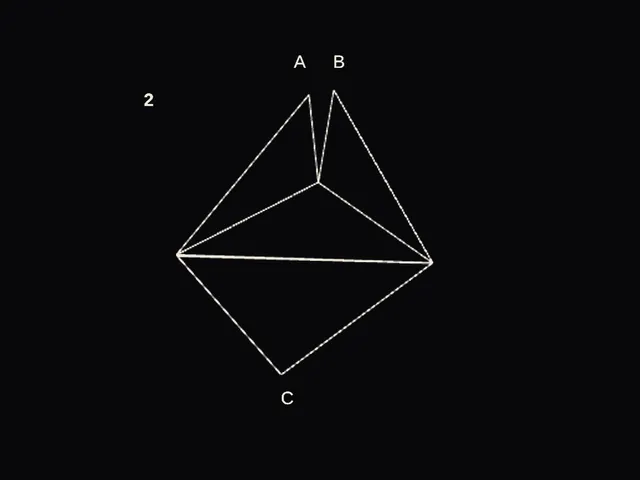
2Fold the fabric so that corners A and B meet.
3Sew the meeting corners together.
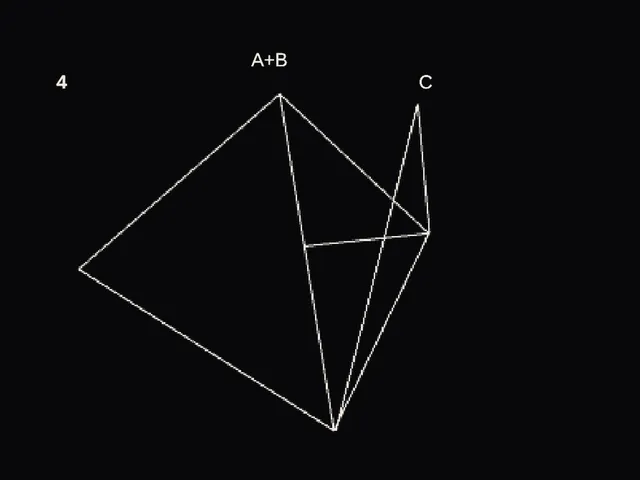
4Bring corners B and C together and sew them.
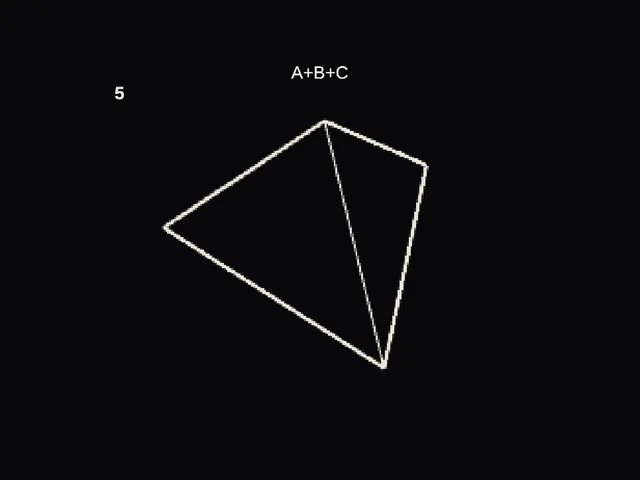
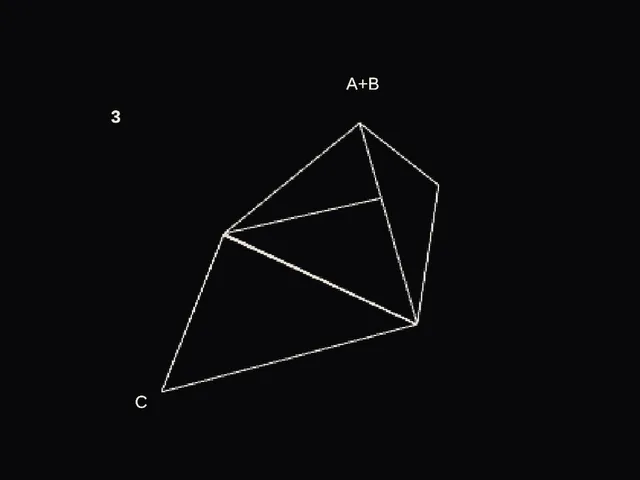
5Close the open gap halfway. Fill the cell with 60 percent polymer beads and 20 percent polymer fiber, and leave some room so the pressure can distribute. Repeat for as many cells as you need.
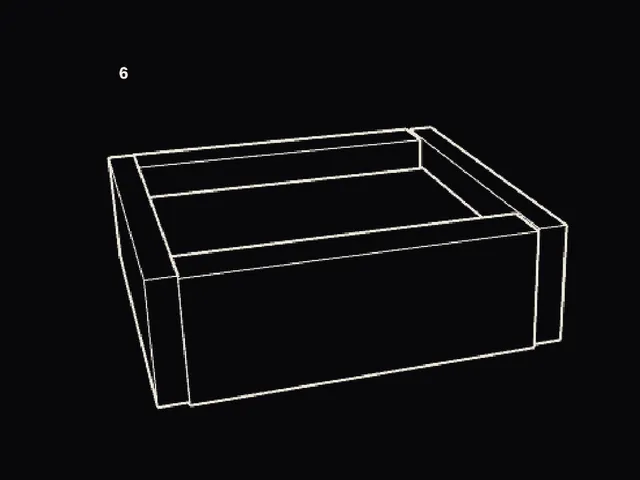
6Form the sponge with walls to keep the cells in. The sponge should be twice as thick as the cell layer.
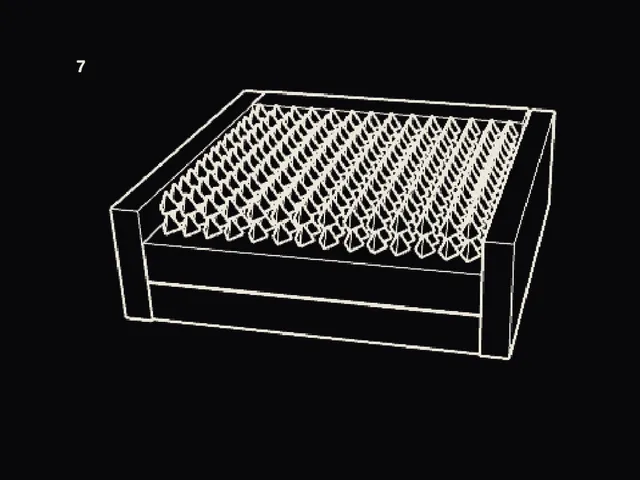
7Fill the sponge with the cells.
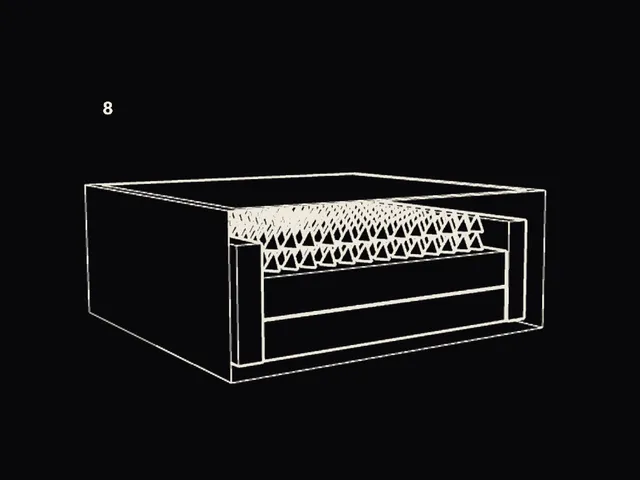
8Cover with tent fabric to protect the cells from water. Add a layer of water repellent fabric to make the bed more comfortable.
This guide describes a student concept. It has not been clinically tested and does not replace veterinary advice.
© 2026 Umut Özer, Atilla Tezci and Ali Deniz Bodur. Licensed under CC BY 4.0.
Brief
Inclusive design for animals. Our course project asked us to design for a user group that products usually forget. We chose immobile dogs in shelters, who cannot turn or stand on their own and lie on the same body areas for days.
Research
We read about inclusive design principles and animal needs, studied dog anatomy and pressure points, and visited three places in Istanbul: Beykoz Animal Rehabilitation Center, Yedikule Animal Shelter and ENCANDER. We saw dogs of three mobility levels (high, moderate and low) and how each one is cared for.
Our target user is Üzüm, a young dog who became fully immobile after distemper. Üzüm cannot move, stand or reposition, and depends on caregivers for posture, hygiene, feeding and comfort. That makes pressure wounds and friction injuries the main risk.
Problem
Immobile dogs carry constant pressure on the same bony points, which reduces blood flow and causes pressure ulcers. In shelters, frequent repositioning is hard, and ordinary bedding does not spread pressure or support posture. The bed has to reduce pressure, allow micro movement and be easy for one caregiver to handle and clean.
Technical drawings
Overall size is 115 × 77 × 20 cm. All dimensions in the technical drawing are in centimeters.
Credits
Designed with Umut Özer and Atilla Tezci for Industrial Design Studio V, Inclusive Design, at Beykent University (2025–2026).
The renders on this page (click a thumbnail to see it full screen) were generated with AI from our design drawings and CAD model, only to visualize the concept. Small details can differ from the technical drawings. The bed shown is a student concept.